
Stranglehold presents a new way of reporting on an old political tradition NHPR’s newsroom has been covering for decades: the New Hampshire primary.
Rather than focus on the candidates, campaign promises, or polls, Stranglehold tells the story of the primary itself — the history, the infrastructure, the behind-the-scenes players and more.
Every four years, the candidates come and go, but the primary remains. It’s an institution that has transformed New Hampshire’s politics over the years, and it continues to shape how many in New Hampshire think of their state.
For many outsiders, the primary may be the only thing they know about New Hampshire.
Accordingly, Stranglehold reports on the primary as NHPR would any other powerful state institution, be it a state agency, a powerful business or an influential special interest group.
Fundamentally, Stranglehold is interested in questions of power as they relate to the primary: What power comes with holding the “first in the nation” Presidential primary? Who most benefits from this power? And what are the consequences — both in New Hampshire and nationally — of the system as it’s now designed?
Outside/In from New Hampshire Public Radio is a show where curiosity and the natural world collide. The program combines solid reporting and long-form narrative storytelling to bring the outdoors to you wherever you are.
We cast a wide net across the environmental spectrum, and do fun explorations of nature, with lots of sound design and immersive scenes. We cover climate change and sustainability, but try to keep solutions to environmental problems in the spotlight; and we do pieces that are more philosophical, reflecting on ways in which society thinks about and depicts nature.
Why does the U.S. have an Electoral College? How do congressional investigations work? What does the minority whip actually do?
Civics 101 is the podcast refresher course on the basics of how the U.S. government works, hosted by Hannah McCarthy and Nick Capodice.
When you’re fighting off a cold or flu, it’s easy to imagine the battle is being waged solely inside the confines of your body.
But in order to spread, pathogens rely on nearly every aspect of our shared societies. Food and drink, social customs, our proximity to animals, urban design, income inequality: The science of epidemiology connects them all.
Patient Zero investigates the spaces where people and pathogens collide. It is a story about Lyme disease, but it is also a story about uncertainty, and what to do in the face of it.
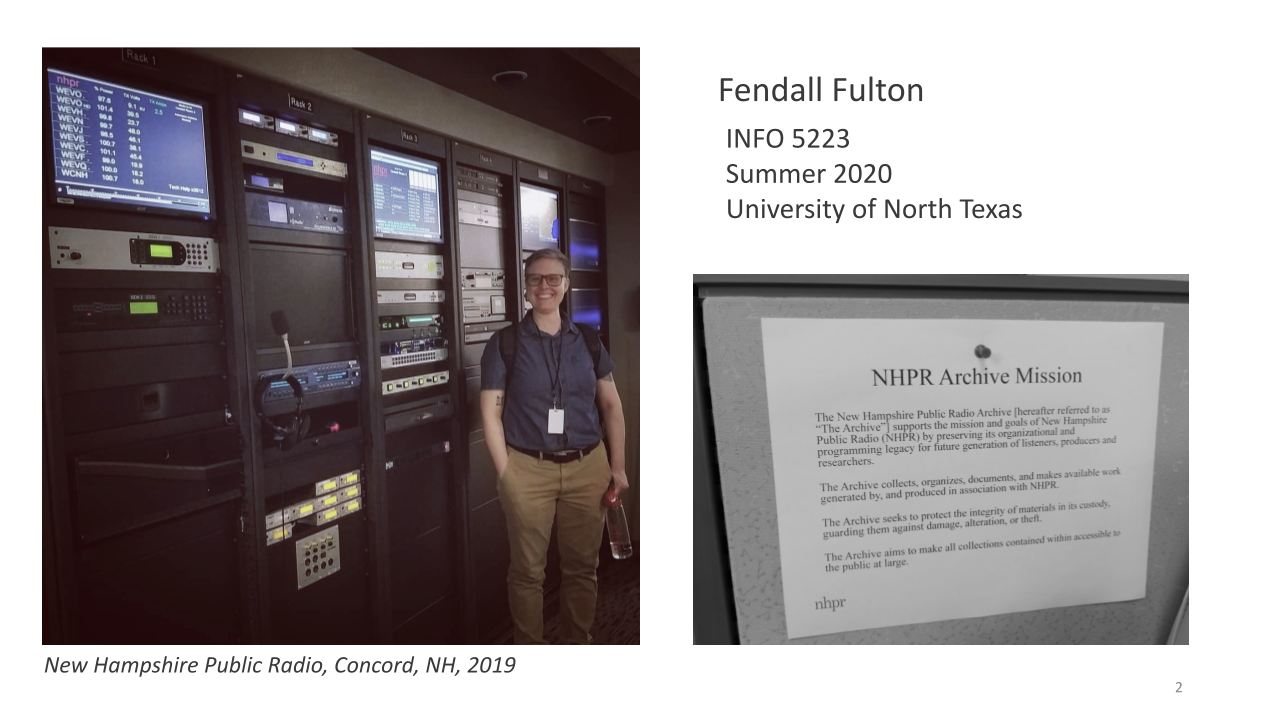




 Fendall Fulton, MS-IS